
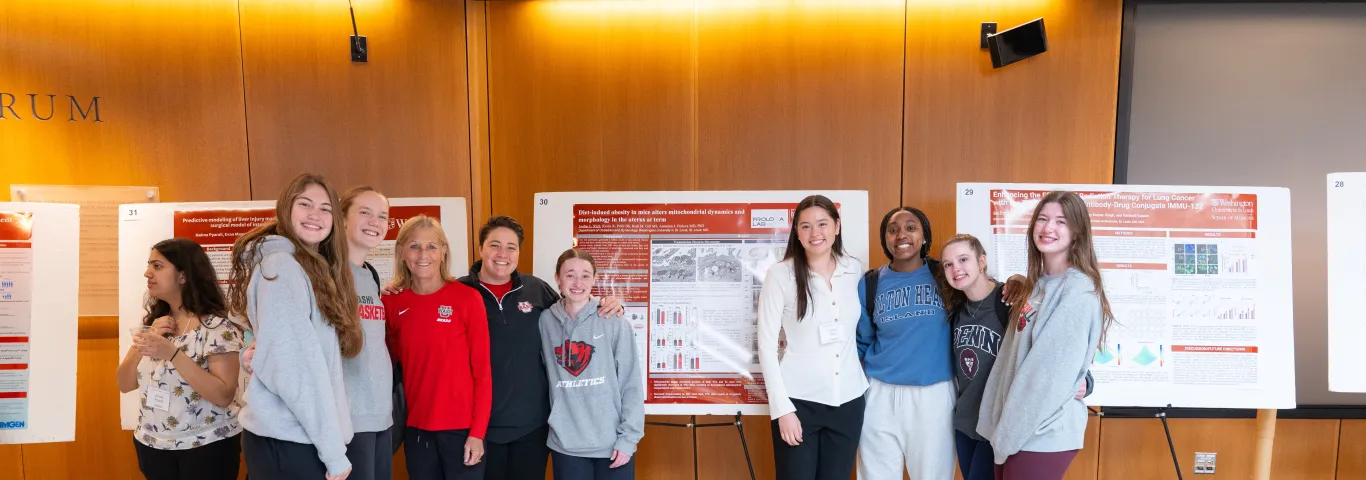
The Office of Undergraduate Research (OUR) is excited to continue the Advancing Research Culture (ARC) program in Spring 2026. ARC is designed to provide early on-ramps into research engagement for first-year undergraduate students with little or no research experience. Faculty submit research projects, students rank up to three projects they are interested in, and the OUR selects ARC participants and matches them to projects.
Student applications for Spring 2026 projects will be open October 15 - November 5, 2025. Interested students can find more details below and on the ARC program webpage.
Eligibility
Students can check to see if federal work study is included in their award package via the Netpartner financial aid portal. They can also contact their Student Financial Services advisor if clarification is needed.
Yes, students who are currently employed and receiving federal work study wages are still eligible to apply for ARC, assuming they have sufficient time in their schedule for undergraduate research. If accepted to ARC, students can coordinate with the OUR to determine if they wish to receive work study wages for their ARC research in addition to or in lieu of their other employment. Importantly, students and employers should be aware that students are not allowed to work more than 20 hours per week across all federal work study jobs. In addition, students receive different amounts of federal work study funding, and working multiple work study jobs will exhaust those funds faster. Students should be aware of their individual funding limit, since once that limit is reached, the OUR cannot provide ARC wages. Students should contact their Student Financial Services advisor with any questions about their award package.
Yes, all first-year students are eligible for ARC regardless of their federal work study eligibility. All ARC participants will receive academic credit for their research hours via Directed Studies courses. Students who are eligible for federal work study may also be able to utilize their available work-study hours to receive wages for their ARC research, in alignment with the policies of the department where they are conducting research. In those cases, the OUR will pay the employer portion of the wages.
Previous research experience refers to participation in an inquiry-based, faculty-led research project. High-school work, including in-depth research papers or projects with informal pilot data collection help familiarize students with the research process, but would not typically disqualify a student from ARC. In contrast, students who have worked on a faculty project at a nearby university or participated in a structured research program would be ineligible for ARC.
Participation in ARC requires a research time commitment of 3 to 10 hours per week (depending on faculty expectations) and corresponding enrollment in a Directed Studies course for 1 to 3 units of academic credit. Enrollment in the Directed Studies course is not optional. Students should therefore plan for those additional credits in their course schedules.
If a student is selected for ARC but is already at the 21-credit limit for spring or if adding the Directed Study credit would put them over the limit, they must drop a course or forgo ARC participation. If an ARC applicant is registered for 18 credits in spring, they will be able to add Directed Studies to their schedule.
That being said, the OUR encourages all ARC applicants to carefully consider their time commitments for spring. Although a student with 18 credits technically has room for Directed Studies enrollment and ARC participation, they should consider whether that schedule will feel manageable once their courses and extracurriculars are underway. ARC participants will be contributing to their faculty mentor’s research projects, so it is imperative that they remain reliable and accountable for their research activities throughout the semester.
Application
No. Selecting only one project does not improve your chances of being matched to it. Instead, selecting multiple projects increases your chance of being successfully matched to one. Nevertheless, students should only rank projects they are enthusiastic about working on since students may not be matched to their first choice.
During the spring 2025 pilot, the OUR received far more ARC applications than we could accommodate, meaning that the program is competitive because demand is high. However, ARC is not “selective” in terms of recruiting the most experienced or accomplished students. Instead, we are particularly interested in providing opportunities to curious, motivated students without prior research experience.
Definitely not. ARC aims to offer first-year students an early opportunity to develop research skills and explore academic interests in a hands-on setting; therefore, the program is a great fit for students who are still figuring out their major.
The OUR seeks students who demonstrate curiosity, openness and thoughtful reflection on how ARC can foster their academic and personal growth. When explaining their project choices, students should convey how the projects’ goals, themes or approaches connect with their own interests and curiosity. Strong responses will identify specific experiences, background or attributes that illustrate why a student is drawn to each project; these can come from school, jobs, hobbies, or other aspects of your life and need not be expressly research related.
The OUR generally encourages students interested in starting undergraduate research to be proactive in reaching out to potential faculty mentors (see the Finding a Mentor page). However, the ARC program differs from the usual cold email process of finding a mentor. ARC was intentionally designed to minimize the burden on participating faculty mentors by having the OUR review and select applicants for the program; faculty mentors do not review applications before matches are made. Given the high volume of ARC applications, we ask applicants to refrain from reaching out directly to faculty about their ARC projects.
Onboarding
The registration procedure varies across departments. The OUR and your faculty mentor’s department will facilitate your registration.
Research schedules are determined with the faculty mentor at the start of the semester. Students and their faculty mentors are expected to discuss and complete a mentor-mentee agreement to outline students’ expected weekly hours and work days/times, their responsibilities and key project milestones for the semester.
The meeting schedule for spring 2026 has not been determined yet, but ARC participants will gather as a cohort with OUR staff for one hour each month during the semester. Meetings are required and will likely occur in the evening (e.g., 5:30-6:30 pm) to accommodate course schedules.
Prior to every session, students will complete pre-reflection exercises in Canvas. During the meeting, students will share and discuss their experiences together. Below is an overview of the spring 2025 meeting agendas, which gives a sense of the program trajectory over the semester.
| Month | Topic |
|---|---|
| January | Orientation, Expectations and Relationship Building
|
| February | Building Research Skills and Habits
|
| March | Progress and Challenges
|
| April | Growth and Next Steps
|